Organic Chemistry Made Easy | Name This Molecule’s Correct IUPAC Name Yourself 2026
Last updated: March 9, 2026 at 5:58 pm by Admin
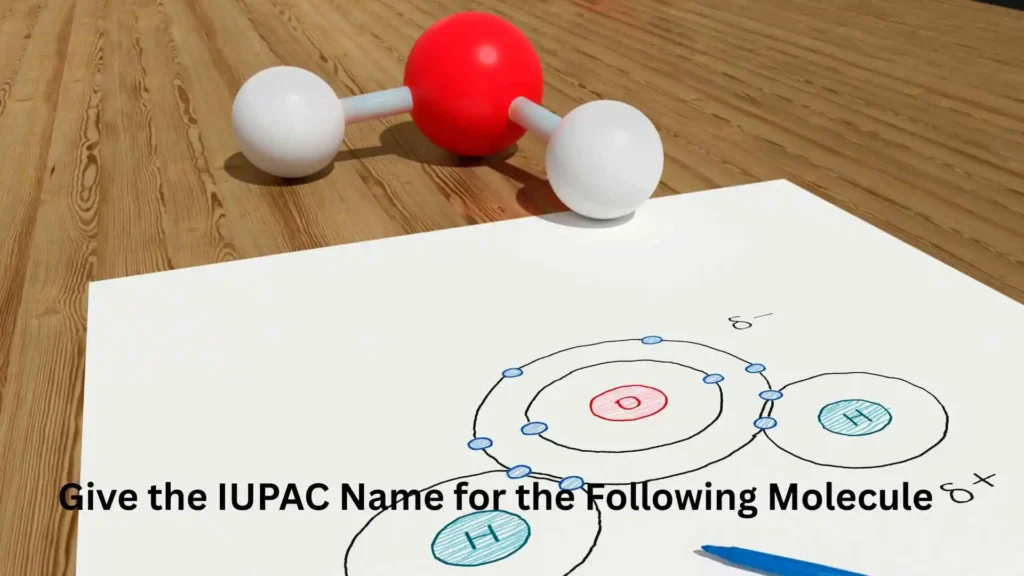
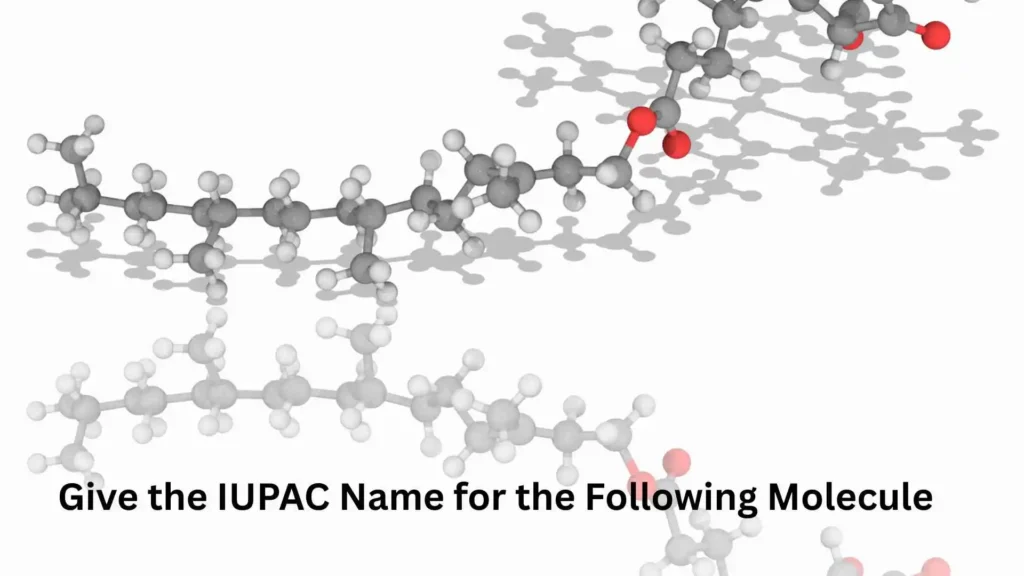
Give the IUPAC Name for the Following Molecule means identifying a chemical compound using an internationally recognized system that clearly explains its molecular structure.
This method is important because it ensures scientific accuracy, improves clarity in chemistry communication, and helps avoid confusion caused by common names.
In my thoughts, learning how to give the IUPAC name for the following molecule builds strong chemistry foundations.
The following sections expand on these key points and guide you toward the choices.
Basic Chemistry Nicknames ⚗️📘
These nicknames are inspired by simple molecules.
They help you remember basic naming ideas.
Each one makes chemistry fun and friendly.
- Methy
Meaning: A cute twist on methane. - Ethio
Meaning: A short name for ethane. - Propro
Meaning: A fun form of propane. - Buty
Meaning: A tiny version of butane. - Hexi
Meaning: A playful hexane nickname. - Octy
Meaning: A simple octane-style name. - Carbo Kid
Meaning: A small carbon chain. - Bond Baby
Meaning: A molecule with simple bonds. - Chainling
Meaning: A tiny carbon chain. - Atom Pop
Meaning: A small popping molecule.
Importance of IUPAC nomenclature
This section explains why scientists use a universal naming system for chemicals so everyone understands the same compound everywhere.
It helps students, teachers, and researchers communicate clearly without confusion.
• Universal Chemical Language
Meaning: Scientists across the world understand compounds the same way.
• Global Naming System
Meaning: Chemistry uses one shared structure for naming molecules.
• Precision Naming Method
Meaning: Every compound receives a clear and exact name.
• Structure-Based Identity
Meaning: The name directly reflects the molecular structure.
• Error-Free Communication
Meaning: Researchers avoid mistakes when discussing compounds.
• Learning-Friendly System
Meaning: Students recognize patterns while studying chemistry.
• Organized Chemical Map
Meaning: Compounds appear in a logical and systematic order.
• Scientific Standard Name
Meaning: Official chemical communities follow the same naming rule.
• Confusion-Free Identification
Meaning: Each compound receives a unique recognizable name.
• Research Communication Tool
Meaning: Scientists easily share discoveries and results.
Nomenclature explanation
This section explains how nomenclature works in chemistry so learners understand how scientists create meaningful compound names.
Understanding this system helps students connect chemical formulas with real structures.
• Naming Rule System
Meaning: A structured method helps create chemical names.
• Molecular Description Tool
Meaning: Names describe how atoms connect together.
• Formula Translation Method
Meaning: The system converts chemical formulas into readable names.
• Structural Identity Guide
Meaning: Naming rules help reveal the compound structure.
• Order-Based Naming Style
Meaning: Prefixes and suffixes follow a specific order.
• Chemistry Language Key
Meaning: Nomenclature acts like a dictionary for compounds.
• Pattern Recognition Method
Meaning: Students quickly identify compounds through patterns.
• Logical Naming Framework
Meaning: Every compound follows the same organized approach.
• Scientific Description System
Meaning: Names explain the compound in a technical but simple way.
• Compound Identity Builder
Meaning: The naming process defines each molecule clearly.
Nomenclature of multiple functional groups
This section focuses on how chemists name compounds that contain more than one functional group.
Learning this rule helps students correctly prioritize groups while naming molecules.
• Priority-Based Naming
Meaning: The most important functional group determines the main name.
• Functional Group Hierarchy
Meaning: Groups follow a priority ranking system.
• Multi-Group Naming Method
Meaning: Chemists include all functional groups in the name.
• Structure Priority Rule
Meaning: The highest ranking group controls the suffix.
• Chemical Role Identifier
Meaning: The name reveals which group drives the compound behavior.
• Complex Molecule Organizer
Meaning: Rules organize complicated molecules clearly.
• Substituent Identification Tool
Meaning: Secondary groups appear as prefixes.
• Multi-Functional Compound Label
Meaning: The system labels compounds with several groups.
• Organic Structure Guide
Meaning: The naming process shows how groups attach.
• Priority Naming Strategy
Meaning: Chemists follow a defined order while naming.
Classification and nomenclature of organic compounds
This section explains how chemists classify organic molecules before naming them.
Classification makes it easier to study thousands of organic compounds systematically.
• Family-Based Classification
Meaning: Compounds group together based on functional groups.
• Carbon Structure Sorting
Meaning: Molecules organize according to carbon arrangement.
• Organic Compound Mapping
Meaning: Classification creates a structured chemical map.
• Functional Identity System
Meaning: Each compound belongs to a specific chemical family.
• Structural Grouping Method
Meaning: Similar structures appear in the same category.
• Chemistry Organization Model
Meaning: Scientists manage complex compounds easily.
• Organic Naming Framework
Meaning: Naming rules apply within each compound class.
• Molecular Relationship Guide
Meaning: Classification reveals similarities between compounds.
• Carbon Chemistry System
Meaning: The approach organizes carbon-based molecules logically.
• Organic Study Blueprint
Meaning: Students learn organic chemistry step by step.
Organic compounds to name
This section focuses on practice examples where students learn how to assign correct names to organic molecules.
Naming practice builds confidence and improves chemical understanding.
• Beginner Naming Exercise
Meaning: Students practice basic compound identification.
• Structure Reading Skill
Meaning: Learners interpret structures before naming them.
• Carbon Chain Identifier
Meaning: The longest carbon chain determines the base name.
• Functional Group Recognition
Meaning: Students identify important chemical groups.
• Organic Naming Practice
Meaning: Exercises strengthen naming accuracy.
• Chemical Structure Challenge
Meaning: Students test their understanding of organic rules.
• Prefix and Suffix Builder
Meaning: Naming teaches correct use of chemical endings.
• Molecular Puzzle Activity
Meaning: Learners solve structures like puzzles.
• Chemistry Skill Development
Meaning: Repeated naming improves mastery.
• Organic Identification Drill
Meaning: Practice sharpens recognition of compound types.
Question on naming compound
This section highlights typical exam-style questions where students must determine the correct IUPAC name.
These questions help learners apply theory in practical situations.
• Naming Problem Example
Meaning: A sample question asks for the correct compound name.
• Structure Interpretation Task
Meaning: Students analyze the molecular structure first.
• Carbon Chain Selection
Meaning: The longest chain becomes the main backbone.
• Functional Group Detection
Meaning: Learners identify important chemical groups.
• Position Numbering Rule
Meaning: Numbers show where substituents attach.
• Organic Naming Challenge
Meaning: Students test their knowledge of IUPAC rules.
• Chemistry Exam Practice
Meaning: Teachers use these questions in assessments.
• Molecular Logic Exercise
Meaning: Students apply reasoning to determine the name.
• Structural Naming Test
Meaning: A structure appears and students name it correctly.
• Organic Rule Application
Meaning: Learners apply theoretical naming rules.
One carbon name
This section explains the naming concept for compounds that contain only one carbon atom.
These simple compounds help beginners understand the basics of organic naming.
• Methane Base Name
Meaning: The simplest organic compound with one carbon.
• Single Carbon Framework
Meaning: The molecule contains only one carbon atom.
• Meth Prefix System
Meaning: “Meth” represents one carbon in nomenclature.
• Simplest Organic Structure
Meaning: One carbon bonded to hydrogen atoms.
• Carbon Starter Compound
Meaning: Students begin organic naming with methane.
• Basic Organic Example
Meaning: It introduces beginners to hydrocarbon naming.
• Single Atom Carbon Base
Meaning: One carbon forms the molecular center.
• Organic Naming Foundation
Meaning: Understanding methane builds future knowledge.
• Methane Learning Model
Meaning: Teachers use it to explain carbon bonding.
• Carbon Chemistry Starting Point
Meaning: It begins the study of organic molecules.
Organic chem naming rules
This section explains the main rules chemists follow when naming organic compounds.
These rules help scientists create names that reflect molecular structure clearly.
• Longest Chain Rule
Meaning: The longest carbon chain forms the base name.
• Numbering Direction Rule
Meaning: Chemists number the chain for the lowest substituent positions.
• Functional Group Priority
Meaning: The most important group determines the suffix.
• Prefix Identification System
Meaning: Substituents appear as prefixes in the name.
• Suffix Naming Method
Meaning: Functional groups control the ending of the name.
• Alphabetical Substituent Order
Meaning: Prefixes follow alphabetical arrangement.
• Position Numbering Guide
Meaning: Numbers show exact atom positions.
• Structural Description Rule
Meaning: The name describes the molecule structure.
• Organic Naming Pattern
Meaning: Names follow predictable chemical patterns.
• Systematic Naming Framework
Meaning: Chemists apply a consistent rule-based approach.
Funny Chemistry Nicknames 😂🧪
These names make molecules feel silly and joyful.
They are perfect for students who want humor in learning.
Each name carries a light mood.
- Bondzilla
Meaning: A molecule with lots of bonds. - Atom Warrior
Meaning: A molecule ready for reactions. - Carbon King
Meaning: A strong carbon chain. - Oxy Dude
Meaning: A molecule with oxygen. - Nerdy Chain
Meaning: A funny long molecule. - Proton Hero
Meaning: A brave positive charge. - Mega Mole
Meaning: A big molecule with style. - Snappy Electron
Meaning: A fast-moving electron. - Radical Rebel
Meaning: A molecule with a radical. - Silly Structure
Meaning: A structure that looks funny.
Cute Chemistry Nicknames 💛🔬

These names soften the feel of IUPAC chemistry.
They’re adorable and help make learning sweet.
Perfect for young learners.
- Baby Benzene
Meaning: A small aromatic ring. - Tiny Tetra
Meaning: A four-carbon cutie. - Sweet Cyclo
Meaning: A calm ring molecule. - Mini Molecule
Meaning: A tiny simple structure. - Little Alkane
Meaning: A soft hydrocarbon chain. - Soft Sigma
Meaning: A gentle sigma bond. - Bitty Branch
Meaning: A small branching chain. - Cute Carbon
Meaning: A happy carbon atom. - Bubble Bond
Meaning: A light bond connection. - Smiley Structure
Meaning: A cheerful molecule.
IUPAC-Inspired Nicknames 🧬📚
These names come straight from IUPAC ideas.
They make long chemical terms feel easy.
Each name helps you remember rules.
- Chain Master
Meaning: A straight carbon chain. - Longest Root
Meaning: The main parent chain. - Prefix Pro
Meaning: A master of alkyl prefixes. - Suffix Star
Meaning: The boss of functional groups. - Number Ninja
Meaning: A pro at numbering carbons. - Branch Boss
Meaning: A chain with side groups. - Position Pro
Meaning: A group placed correctly. - Bond Counter
Meaning: One who counts double bonds. - Parent Finder
Meaning: One who finds main chains. - Rule Keeper
Meaning: A molecule that follows IUPAC rules.
Strong Chemistry Nicknames ⚡🧪
These names feel powerful and bold.
They give molecules a strong presence.
Perfect for tough chemical characters.
- Bond Titan
Meaning: A molecule with powerful bonds. - Chain Crusher
Meaning: A long carbon chain. - Mega Carbon
Meaning: A big carbon group. - Quantum Force
Meaning: A strong quantum effect. - Hybrid Hero
Meaning: A hybridized atom. - Aroma Beast
Meaning: A strong aromatic ring. - Double Bond King
Meaning: A master of double bonds. - Chain Giant
Meaning: A long, tough chain. - Core Reactor
Meaning: A reactive molecule. - Ion Titan
Meaning: A charged giant.
Aesthetic Chemistry Nicknames 🌫️✨
These names make molecules feel calm and beautiful.
They match soft, aesthetic science styles.
Perfect for social media captions.
- Crystal Chain
Meaning: A pure, clean carbon chain. - Soft Orbit
Meaning: A gentle electron path. - Moon Molecule
Meaning: A calm night-inspired structure. - Lilac Bond
Meaning: A soft bond connection. - Sky Sigma
Meaning: A smooth, simple bond. - Sea Carbon
Meaning: A flowing organic chain. - Halo Glow
Meaning: A glowing halogen. - Mist Ion
Meaning: A soft charged atom. - Dream Ring
Meaning: A floating ring chain. - Ocean Orbit
Meaning: A peaceful electron circle.
Organic Chemistry Nicknames 🌿🔬
These names are inspired by real organic structures.
They help you remember molecule families.
Each one gives a natural vibe.
- Alkane Angel
Meaning: A simple hydrocarbon. - Alkene Breeze
Meaning: A double bonded molecule. - Alkyne Fire
Meaning: A triple bonded chain. - Cyclo Cutie
Meaning: A soft ring chain. - Halo Honey
Meaning: A halogen-containing molecule. - Aroma Dream
Meaning: A gentle benzene ring. - Ester Cloud
Meaning: A sweet-smelling group. - Amine Breeze
Meaning: A nitrogen-containing chain. - Alcohol Mist
Meaning: A smooth OH group. - Carbon Ribbon
Meaning: A long organic chain.
Science Classroom Nicknames 🏫📖
These nicknames fit school science moods.
They’re fun and easy to remember.
Perfect for classroom notes.
- Lesson Mole
Meaning: A molecule used for teaching. - Board Bond
Meaning: A molecule drawn on a board. - Teacher Chain
Meaning: A common example chain. - Quiz Carbon
Meaning: A structure from tests. - Exam Ion
Meaning: A charged group from exams. - Lab Hero
Meaning: A popular experiment molecule. - Booky Bond
Meaning: A molecule from textbooks. - Class Cyclo
Meaning: A ring used in classes. - Study Star
Meaning: A helpful structure. - Note Namer
Meaning: A molecule used for naming practice.
Fictional Science Nicknames 🌌🧪
These names mix chemistry and imagination.
They are perfect for stories and characters.
Each one feels magical and scientific.
- Nova Bond
Meaning: A star-like bond. - Galaxy Chain
Meaning: A cosmic carbon chain. - Stellar Orbit
Meaning: A space-like atom path. - Quantum Wing
Meaning: A molecule with speed. - Nebula Carbon
Meaning: A glowing carbon chain. - Star Sigma
Meaning: A bright simple bond. - Ion Drift
Meaning: A floating charged atom. - Ether Dream
Meaning: A soft oxygen structure. - Cosmic Hybrid
Meaning: A space-style hybridization. - Solar Structure
Meaning: A warm glowing molecule.
IUPAC Learning Basics 🔍📘
These names help you remember basic naming rules.
They make technical steps feel easier.
Great for fast revision.
- Root Finder
Meaning: Choose the longest chain. - Number Starter
Meaning: Find the correct numbering side. - Group Marker
Meaning: Locate all functional groups. - Suffix Writer
Meaning: Choose the right ending. - Prefix Picker
Meaning: Select the correct prefixes. - Bond Finder
Meaning: Identify double and triple bonds. - Locator Counter
Meaning: Number all important positions. - Branch Spotter
Meaning: Find branches on the chain. - Name Builder
Meaning: Combine all parts to form a name. - Final Checker
Meaning: Make sure the name follows rules.
FAQs on IUPAC Name of a Molecule
Q1: What is the IUPAC name of a molecule, and why does it matter?
The IUPAC name is the official, standardized name of a chemical compound based on international rules. It matters because it allows scientists and students worldwide to identify the compound accurately, avoiding confusion from common or local names, especially in research, pharmaceuticals, and academic studies.
Q2: How can I determine the IUPAC name of an organic molecule step by step?
Start by identifying the longest carbon chain as the parent structure. Number it to give the lowest position to functional groups. Next, add prefixes for substituents, suffixes for functional groups, and follow priority rules carefully. This systematic approach ensures clarity and consistency in naming.
Q3: Are there common mistakes when naming molecules using IUPAC rules?
Yes. Frequent mistakes include incorrect chain numbering, misidentifying functional groups, ignoring multiple substituents, or using outdated prefixes. Understanding the hierarchy of functional groups and practicing with varied examples helps prevent these errors and improves accuracy.
Q4: Can the same molecule have multiple IUPAC names?
Typically, a molecule has one correct IUPAC name. However, in complex cases, alternative names may exist based on retained trivial names or traditional conventions. The recommended name is always the one that strictly follows IUPAC rules, ensuring global consistency.
Q5: Why is learning IUPAC naming essential for students and chemists?
IUPAC naming provides a clear and universal language for chemistry. Students use it to excel in exams, while chemists rely on it in labs and publications. Understanding the system deeply also improves comprehension of molecular structure and reactivity, making chemistry more practical and intuitive.
Q6: How can I improve my IUPAC naming skills quickly?
Practice is crucial. Start with simple molecules like alkanes and gradually progress to more complex compounds with multiple functional groups. Using worksheets, molecular models, quizzes, and real-life examples builds confidence and reinforces proper naming habits.
Q7: Are IUPAC names only for organic molecules?
No. IUPAC names are used for both organic and inorganic compounds. Organic naming emphasizes carbon chains and functional groups, while inorganic naming considers coordination, oxidation states, and molecular composition. This standardization allows chemists to communicate unambiguously across disciplines.
Conclusion
This full guide blended chemistry learning with fun, cute, unique, powerful, and aesthetic nickname categories to make the keyword “give the IUPAC name for the following molecule” simple, memorable, and enjoyable while helping readers understand naming rules and enjoy creative chemistry-inspired ideas across many styles.
Discover More Topics:
- 147+ Name for a Group of Crows | Meaning, History & Fun Facts Guide 2026
- 163+ Scientific Name for Crab Guide 2026 | Classification & Identification Explained
- 161+ What Is the Least Popular Name for a Girl 2026 | Rare & Uncommon Baby Name Guide

Emily Rhodes is a contemporary fiction author known for emotionally engaging stories that explore love, identity, and quiet resilience through lyrical storytelling.
Books by Emily Rhodes
-
Where the Quiet Hearts Rest
-
Beneath the Light We Hide