
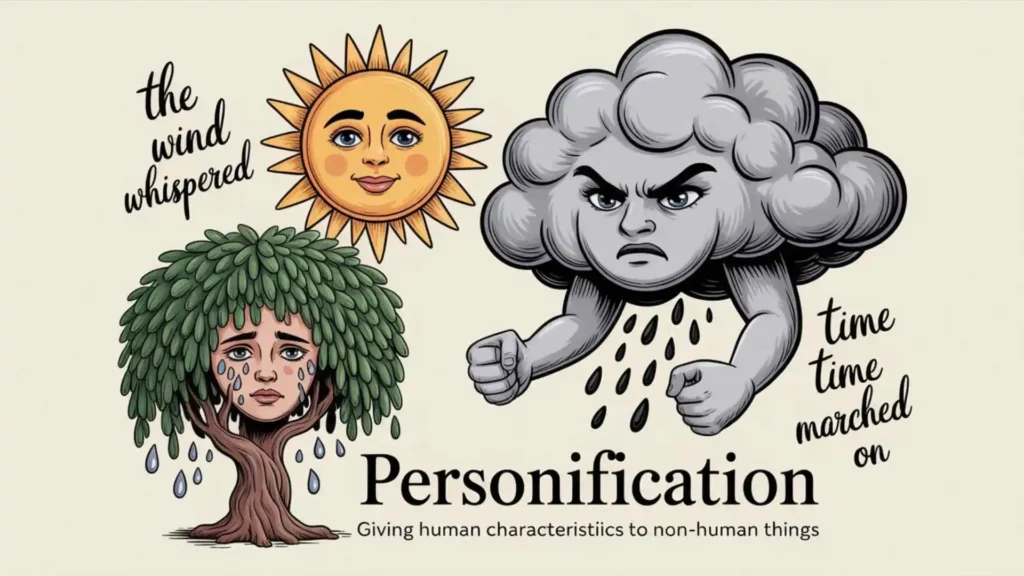
Personification is a powerful literary device that gives human qualities to animals, objects, or ideas.
It helps writers make stories and descriptions more vivid, relatable, and memorable. From classic literature to everyday expressions, personification is everywhere.
In this guide, we’ll explore what personification means, its examples, uses, and practical tips for writing.
What Is Personification?
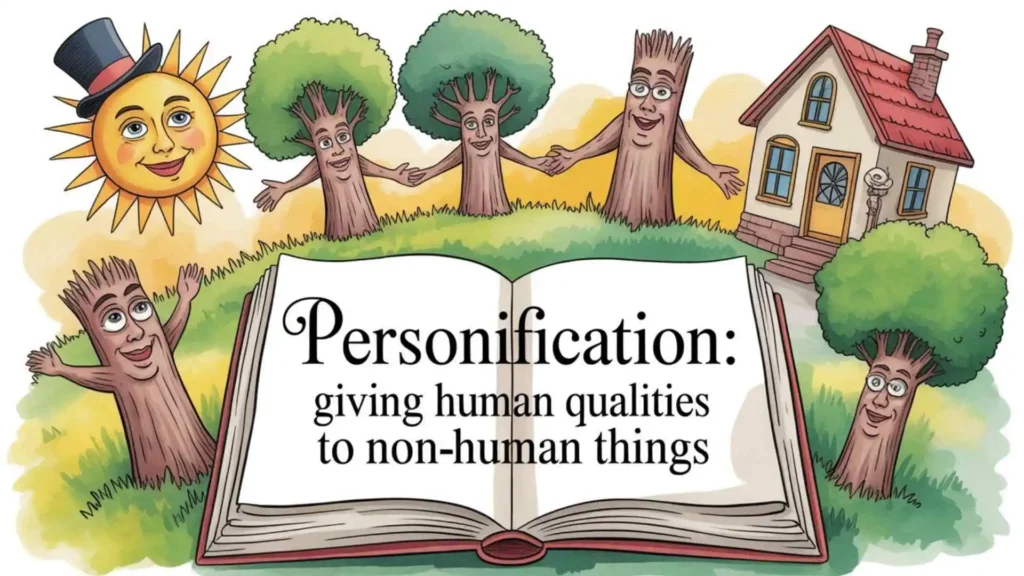
Personification is a figure of speech where non-human things are given human traits, emotions, or actions. Unlike metaphors or similes, which make comparisons, personification directly makes an object or idea act like a person. Writers use it to create vivid imagery and evoke emotion in readers.
Key Features of Personification
- Human Traits: Objects, animals, or concepts act, think, or feel like humans.
- Emotional Connection: It allows readers to empathize with non-human elements.
- Imagery: Makes descriptions more vivid and memorable.
Why Personification Is Important
Personification enhances storytelling, helping readers connect with abstract or inanimate concepts. It adds creativity to writing, makes literature engaging, and is widely used in poetry, novels, advertisements, and even everyday conversation.
Examples of Personification in Literature
- Shakespeare: “The grey-eyed morn smiles on the frowning night.”
- Shel Silverstein: “The wind sang a lullaby through the trees.”
- Analysis: These examples transform ordinary scenes into lively and emotional experiences, helping readers visualize and feel the environment.
Examples of Personification in Daily Life
- Common Expressions: “Time flies when you’re having fun.”
- Advertising: Talking mascots like the M&M characters or the Energizer Bunny.
- Media & Animation: Objects and animals acting like humans in cartoons and movies.
How to Identify Personification
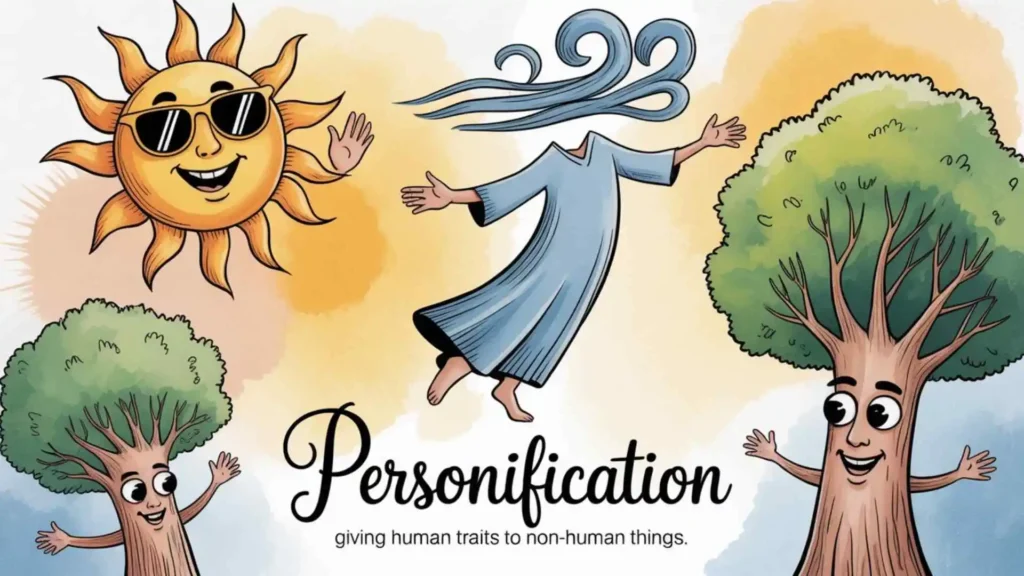
- Non-human subjects performing human actions.
- Objects or ideas displaying emotions or thoughts.
- Context clues: look for figurative language meant to create imagery or emotion.
Personification vs. Anthropomorphism
- Personification: Figurative language; objects or ideas act human-like for effect.
- Anthropomorphism: Literal; animals or objects act human-like as characters.
- Example: “The wind whispered through the trees” = personification. Talking animals in a cartoon = anthropomorphism.
How to Use Personification in Writing
- Do: Use it to enhance imagery, creativity, and emotion.
- Don’t: Overuse it or make it cliché.
- Tips: Start with simple objects, nature, or feelings, and give them subtle human actions to make writing lively.
Common Mistakes to Avoid
- Confusing personification with simile or metaphor.
- Overloading text with too many personifications.
- Using unrealistic human traits that confuse the reader.
Exercises to Practice Personification
- Rewrite plain sentences: “The sun rose” → “The sun stretched its golden arms across the sky.”
- Identify personification in poems, ads, or stories.
- Write creative sentences giving life to objects or abstract concepts.
Conclusion
Personification brings language to life by making objects, animals, and ideas relatable and expressive. By understanding what personification means and practicing its use, you can make your writing more vivid, imaginative, and engaging. Whether in literature, everyday speech, or creative projects, personification transforms simple words into unforgettable imagery.
Discover More Topics:

Clara Whitmore is a literary fiction writer celebrated for her poetic prose and emotionally layered narratives.
Her stories explore love, loss, self-discovery, and the quiet strength of women in changing worlds.
Clara’s writing style is gentle yet powerful, leaving readers deeply connected to her characters long after the final page.
Books by Clara Whitmore
-
The Weight of Unspoken Words
-
Petals Falling in Winter