
You’ve probably seen N/A on forms, surveys, spreadsheets, or reports and wondered what it actually means.
It can be confusing, especially when deciding whether to leave a field blank or write N/A.
Understanding its meaning and proper use can help you fill forms accurately and avoid mistakes.
This guide explains N/A clearly, with examples, correct usage, and common mistakes to avoid.
What Does N/A Mean
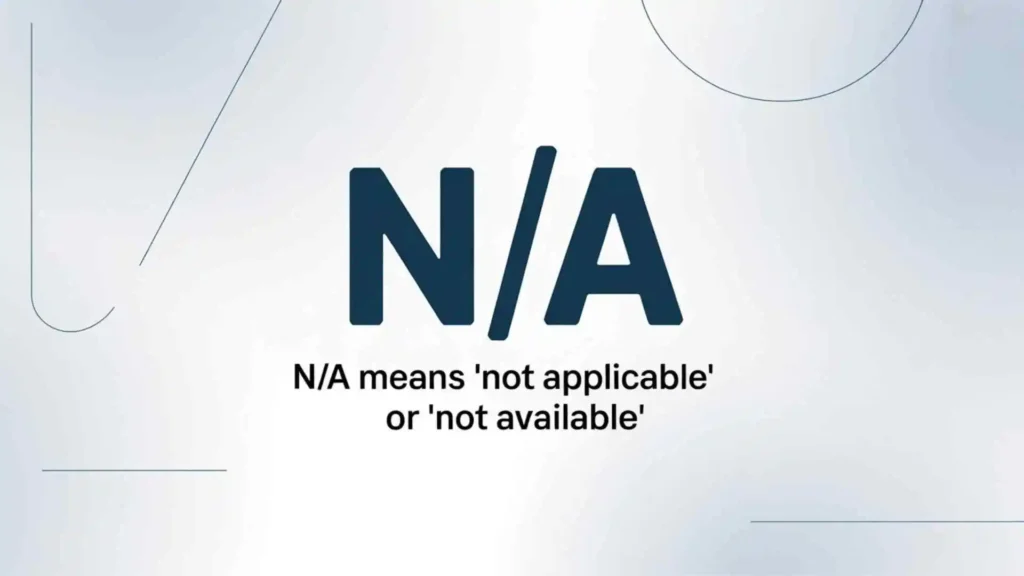
N/A stands for “Not Applicable.”
It is used when a question, field, or section does not apply to your situation.
Instead of leaving it blank or guessing, writing N/A signals that the field is intentionally irrelevant.
Full Form of N/A
The full form of N/A is Not Applicable, which means the information requested doesn’t apply to you or the situation.
It is widely recognized in professional, academic, and casual contexts.
Knowing the full form helps you understand its proper use in forms, reports, and digital documents.
Common Uses of N/A
- Forms and Surveys: Skipping fields that do not apply.
- Tables and Spreadsheets: Indicating missing or irrelevant data.
- Reports and Documents: Showing intentional non-applicability.
- Online Applications: Preventing confusion when a question is irrelevant.
Examples of N/A in Forms and Surveys
- “Middle Name: N/A” (if you don’t have one)
- “Driver’s License Number: N/A” (if not applicable)
- “Previous Employment: N/A” (for first-time job applicants)
- “Spouse Name: N/A” (if single)
These examples show N/A clearly communicates that the field is intentionally skipped.
How to Use N/A Correctly
- Only use N/A when the field genuinely does not apply.
- Use consistent capitalization (N/A is standard).
- Avoid using it in mandatory fields where leaving it blank is better.
- In digital forms, check if N/A is allowed before entering it.
N/A vs NA vs n.a.: Understanding the Differences
- N/A: Most common and widely accepted abbreviation.
- NA: Sometimes used but can confuse people; less formal.
- n.a.: Older style, often seen in academic writing.
Use N/A in professional or official contexts for clarity.
When Not to Use N/A
- Do not use in mandatory fields where an actual answer is required.
- Avoid in casual messaging unless context is clear.
- Do not assume N/A means “Not Available” unless specified; context matters.
Alternatives to N/A in Professional Documents
- “None”
- “Not Relevant”
- “No Response”
- “Left Blank”
These alternatives are sometimes preferred in formal reports or academic work.
Common Misunderstandings About N/A
- Thinking it always means “Not Available.”
- Overusing it in forms when leaving a field blank is sufficient.
- Believing NA (without the slash) is interchangeable in official documents.
Understanding the context ensures proper and professional usage.
Tips for Using N/A in Digital and Paper Forms
- Check the instructions before using N/A.
- Be consistent across all fields or tables.
- Use it to avoid confusion or inaccurate entries.
Why Understanding N/A Matters
Using N/A correctly prevents errors in official documents, surveys, or reports.
It signals professionalism, attention to detail, and clarity in communication.
Correct use avoids misinterpretation by employers, schools, or data analysts.
Conclusion
N/A means “Not Applicable” and is used to indicate that a field, question, or section does not apply to your situation. Using it correctly ensures clarity in forms, surveys, and professional documents, helping you avoid errors and miscommunication.
Discover More Topics:

Liam Hawthorne is a contemporary fiction author known for his emotionally rich storytelling and realistic characters.
His writing focuses on human struggles, quiet resilience, and the unseen emotions people carry in everyday life.
Liam’s stories blend modern themes with deep introspection, making his work relatable to readers across cultures.
Books by Liam Hawthorne
-
Beneath the Silent Skies
-
Where Shadows Learn to Speak